

Developing psychic abilities can begin with learning how you notice, interpret and respond to intuitive impressions. Choose one manageable practice, keep honest notes and leave room for feedback. You can approach the work spiritually while still asking what was observed, what was inferred and what remains uncertain.
You do not need dramatic visions, a special purchase or a perfectly quiet mind. A useful beginner foundation is attention, reflection, consent and the freedom to stop. Progress can mean understanding your own patterns more clearly, rather than making stronger promises.
Learn the language without turning labels into a test
Practitioners use clairvoyance for claimed visual impressions, clairaudience for claimed hearing, clairsentience for claimed feeling and claircognizance for claimed knowing. Some people identify strongly with one description; others use several or no label at all.
A vivid image or a strong feeling does not by itself identify its source. You can describe the experience, consider its meaning and keep ordinary explanations in view. Our guide to psychic specialties explains how methods and reading formats can differ.
Exercise 1: notice before interpreting
Look around a familiar room and write a few concrete details: light, sounds, colours and objects. Then note your feelings and any association that came to mind. Keep those lists separate.
For example, “the room is quiet” is an observation; “I feel uneasy” is an experience; “someone is upset with me” is an interpretation. The distinction gives intuition a place without converting every feeling into a fact about another person.
Exercise 2: keep an impression journal
Choose a small, everyday topic that does not carry serious consequences. Record the impression, time and context before you learn more. Later, note what happened and how closely it matched the original wording.
Include misses, vague entries and details you already knew. Do not rewrite “I may receive a message” into “I predicted this specific person would call” after an event. The record is useful when it preserves what you actually thought.
| Field | Example or purpose |
|---|---|
| Original impression | Keep the words as they first appeared. |
| Known context | Include clues or information you already had. |
| Possible interpretations | Leave more than one explanation open. |
| Later information | Record what actually happened, with its source. |
| Review | Note clear connections, uncertainty and mismatches. |
Exercise 3: work with an image or card
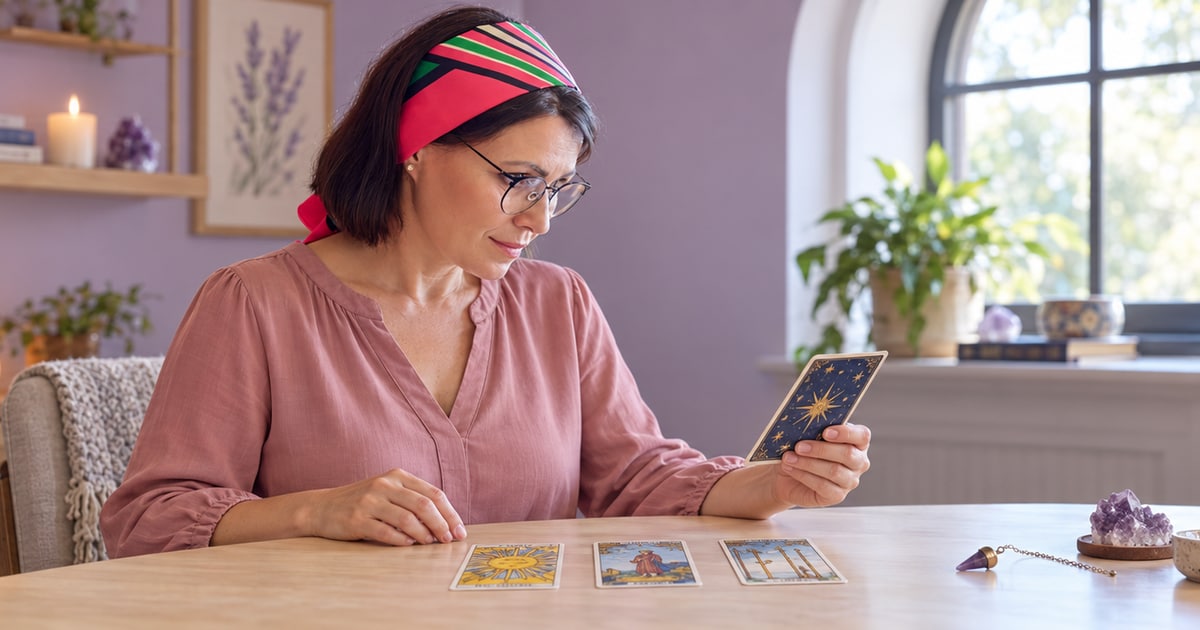
Choose one tarot or oracle card. Describe its imagery before consulting a guidebook, then ask how the symbols connect with a question about your own choices. A useful prompt is “What perspective could I explore today?”
You can use the exercise to practise describing associations clearly. It does not require the card to predict an event or reveal someone else’s private thoughts. Write the question before drawing and avoid changing it afterward to fit the answer you wanted.
Exercise 4: explore an object with permission
Psychometry is the practice of interpreting impressions associated with an object. If you try it, use an ordinary safe object and obtain its owner’s permission. Avoid irreplaceable items, intimate belongings and anything you are uncomfortable handling.
Note what you observe physically, what you already know and what you imagine. Keep the exercise low-pressure and accept “no connection” as feedback. Do not use an object to make medical claims, accusations or conclusions about someone’s private history.
Exercise 5: reflect on a dream
Write what you remember before searching for a meaning. Include the setting, people, feelings and distinctive images. Then ask what associations are personal to you.
You can consider a dream spiritually without treating it as a deadline or instruction. If nothing useful emerges, leave it open. Sleep and ordinary routines matter more than trying to produce an experience.
Meditation and quiet attention
If meditation fits your practice, start with a brief, comfortable session. Let your breathing remain natural and notice when your attention moves. You can return to an ordinary sound or visual detail without judging the distraction.
Music, prayer or a quiet walk may suit you better than sitting in silence. Choose a form that feels manageable. Calm can make reflection more comfortable, but feeling calm is not a guarantee that an impression is accurate.
Practise with others respectfully
Explain that you are learning and ask whether the person wants to participate. Agree on the topic, length and boundaries. They may decline a question, keep an association private or stop the exercise.
Ask open questions and avoid fishing for details. Accept corrections without blaming the person’s beliefs. Permission for a practice session is separate from permission to record it, use it as a testimonial or share it publicly.
Intuition and practical judgment
A feeling can suggest a question to investigate. It should not decide a diagnosis, investment, legal matter or another person’s intentions. Compare the impression with observable information and the appropriate professional advice when consequences matter.
If you feel that something in a relationship needs attention, describe the behaviour you noticed and have a conversation where appropriate. “I want to understand why our plans keep changing” gives you more to work with than an accusation based on an impression.
Choose teaching that allows questions
Ask what a class teaches, how feedback works and what fees or commitments apply. Be cautious with guarantees of powers, threats about spiritual danger or claims that disagreement means you are blocking success.
Family stories may be part of your interest. Our article on psychic gifts and family experience offers another perspective, while leaving room for your own path. You do not need a particular family background to explore a spiritual practice.
Review the practice, not just the result you hoped for
Clarity
Can you describe an impression without adding a larger claim?
Feedback
Can you accept a mismatch and keep it in the record?
Balance
Does the practice fit rest, relationships and ordinary responsibilities?
There is no required pace or reading schedule. Take breaks if the work feels frightening, compulsory or disruptive. Seek appropriate support if distress persists, and keep practical wellbeing alongside spiritual interests.
Frequently Asked Questions
1. Can a beginner explore psychic development?
Yes, through manageable spiritual or reflective practices, while keeping expectations and boundaries clear.
2. Do I need a special tool?
No. Observation and journaling can be a starting point; cards or objects are optional.
3. Does a strong feeling prove psychic information?
No. Describe the experience and compare interpretations with ordinary context and available information.
4. Are first impressions always correct?
No. Record them before interpretation, but do not assume speed or intensity makes them accurate.
5. What should I put in a journal?
Original wording, known context, possible interpretations, later information and feedback, including mismatches.
6. How can I practise with a card?
Describe the imagery and connect it to a question about your own choices, keeping the original question in your notes.
7. What is psychometry?
A practice of interpreting impressions associated with an object. Keep observations, known information and imagined meanings distinct.
8. Can I use someone’s object without permission?
No. Obtain permission and avoid private, unsafe or irreplaceable items.
9. Must I meditate in silence?
No. Choose a manageable form of attention, such as quiet observation, prayer, music or a walk, if it suits you.
10. Does being calm guarantee accuracy?
No. Calm may make reflection more comfortable, but an impression still needs thoughtful interpretation.
11. Can I practise with friends?
Only with their informed, free agreement and clear topics, time and stopping rules.
12. What if a friend says nothing fits?
Accept the feedback and record it without blame or pressure.
13. Should intuition decide health or money matters?
No. Use qualified assistance and verifiable information for consequential medical, legal and financial decisions.
14. What should I look for in teaching?
Clear content, fees, feedback, consent and space for questions, without guaranteed powers or fear-based pressure.
15. What if the practice becomes stressful?
Pause and return to ordinary routines. Seek appropriate support if distress continues.