


When Relationships Change
There are times in every relationship where things start to change. The excitement can still be there, but the questions start to come to the surface. People wonder if this is the person that they want to build their life with, or if they even understand each other. They wonder if they can create a meaningful life with this person.
If you’re starting to ask questions about your relationship, you’re in an important phase. This is a change from a causal connection to being an intentional partnership. This is where emotional intimacy is no longer optional, but it becomes the foundation of the relationship.
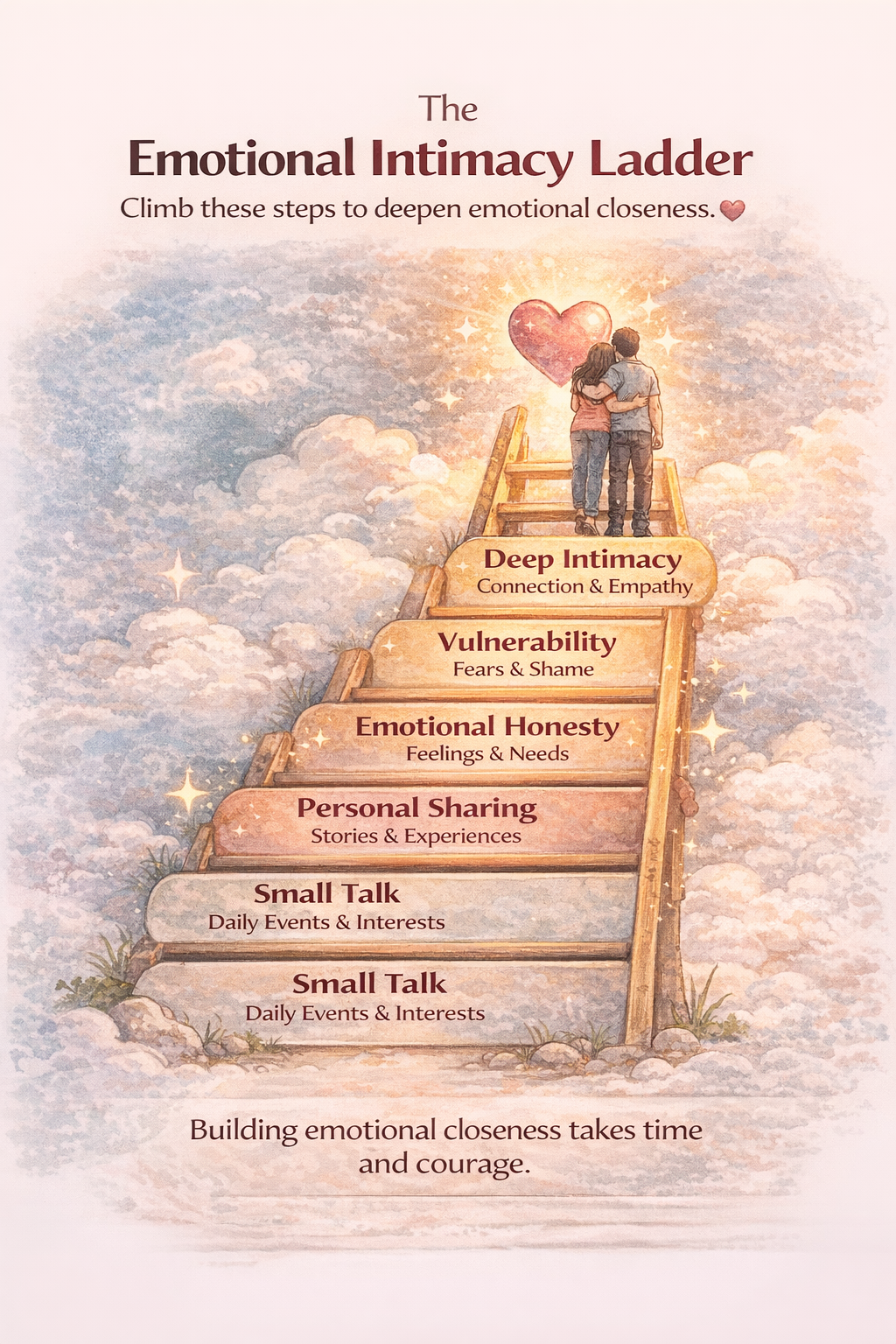
Understanding Emotional Intimacy
In a relationship, emotional intimacy means that two people can share a sense of closeness that is very deep and allows them to be fully open without fear of judgment, misunderstanding, or rejection. Here’s why emotional intimacy matters:
- It creates long-term trust.
- It helps people to deal with conflict in a healthy way.
- It creates emotional safety.
- It brings security.
- It strengthens long-term compatibility.
Emotional intimacy isn’t just about talking with each other. It’s about being heard, seen, and valued.
Why Deepening Emotional Intimacy Benefits Relationships
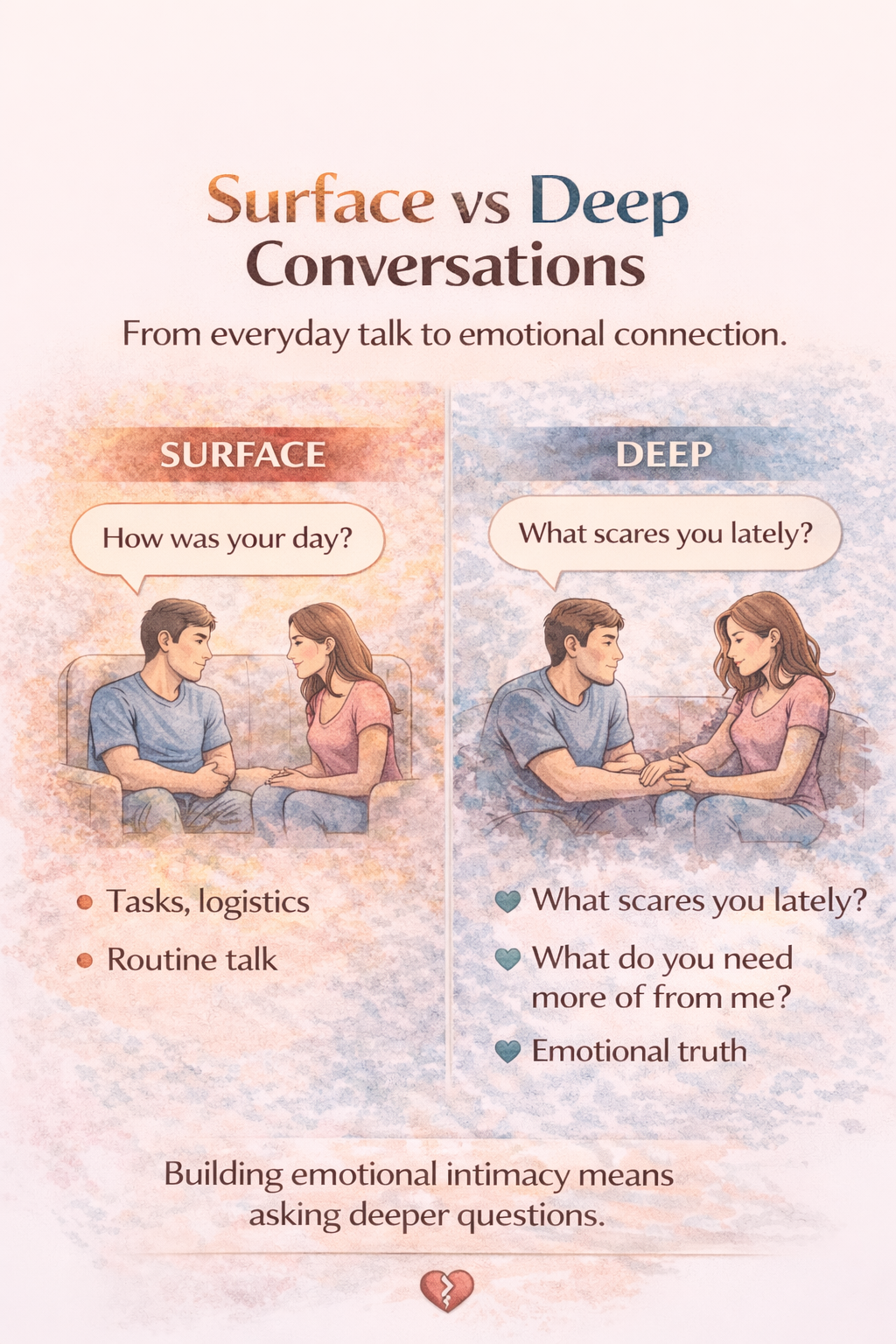
As emotional intimacy grows, your relationship becomes stronger and more fulfilling. This is what deep conversations can show you about your relationship:
- If you’re compatible with your partner.
- If you can trust each other.
- If your values align with one another.
- How you handle conflict.
By having these insights, it helps you to make decisions on understanding and not just based on chemistry or hope.
Asking Questions to Make Emotional Intimacy Stronger
Before you start asking questions, you need to make sure that you are creating the right space. Here’s how to create a safe space for communication:
- Pick a relaxed and distraction-free time to talk.
- Let the conversation flow naturally.
- Don’t pressure each other.
Always keep the conversation natural. Try this:
- Talk about what you’re curious about.
- Ask follow-up questions.
- Share your own thoughts and answers.
- Listen to understand and not just to respond.
Emotional intimacy will grow through mutual vulnerability and respect for one another.
100 Questions to Make Emotional Intimacy Stronger
Here are 100 questions to ask your partner to make emotional intimacy stronger:
Trust and Vulnerability
- What does trust mean to you?
- How do you deal with people when they let you down?
- What shaped you growing up?
- How do you handle it when you feel let down?
- What makes you feel vulnerable?
- What are your biggest fears when it comes to love?
- How do you know if you trust someone?
- What are you working on in your emotions?
- How do you want to feel supported when times are hard?
- What mistake taught you the most about who you are?
- How do you process emotions when you’re upset?
- What is emotional safety to you?
- What do people usually misunderstand about you?
- How do you handle stress?
- What past experiences affect your life today?
- What does forgiveness mean to you?
- What is something you’ve never told anyone else?
- When do you feel emotionally exposed?
- How do you react when you feel emotional pain?
- What helps you to be more open?
- What makes you feel understood?
Goals and Future
- What does your ideal life look like in the next five years?
- What dreams have you had since childhood?
- How do you balance a job and a relationship?
- What does your family role look like in the future?
- What kind of home environment feels the best for you?
- How do you see your life in the next 10 years?
- What is financial security to you?
- Where do you want to live in the future?
- What kind of lifestyle do you want?
- What excites you about your future?
- What goals matter to you?
- What does success mean to you right now?
- What kind of legacy would you like to leave?
- What are some things that are non-negotiables?
- How do you deal with big life decisions?
- What motivates you?
- What would your dream life look like?
- What are you afraid might not happen for you?
- What does it look like to be fulfilled?
- What would you regret never doing?
Values and Personal Growth
- What is the most important lesson life has shown you?
- How have your priorities changed?
- What beliefs have you outgrown?
- How important is personal growth?
- What are your strengths?
- What areas are you working to improve?
- What makes you feel authentic?
- What is integrity?
- What values matter to you?
- What values did your family teach you to have?
- What patterns do you want to break?
- How do you handle the differences in values?
- What makes you want to grow?
- What does success feel like to you?
- How do you respond to failure?
- What makes you become a better person?
- What kind of person do you want to be?
- What challenges shaped who you are?
- What does growth look like?
- What keeps you grounded?
Love and Connection
- What makes you feel loved?
- How do you express love?
- What gestures mean the most to you?
- How do you feel comforted?
- What’s your favorite memory of feeling loved?
- What makes you feel like you’re being appreciated?
- What kind of affection do you enjoy the most?
- What does quality time mean to you?
- What strengthens your connections?
- What makes you feel disconnected from someone?
- How do you show someone you care?
- How do you reconnect after distance?
- What does emotional closeness feel like for you?
- What makes you feel attracted to someone?
- How do you keep a connection over time?
- What kind of partner do you want to be?
- What is romance?
- How do you show appreciation?
- What makes you feel like you were chosen?
- What keeps love strong for you?
- How do you express appreciation?
Conflict and Emotional Challenges
- How did your family handle conflict growing up?
- What happens when you feel criticized?
- What makes you feel heard?
- How can someone approach you when there’s a conflict?
- What keeps you calm when you’re upset?
- What does a real apology look like to you?
- How do you handle disagreements?
- What’s your biggest conflict trigger?
- How do you deal with hurt feelings?
- Do you want space, or do you want to talk about something immediately?
- What helps resolve an argument?
- What makes you feel safe when a conflict is happening?
- How do you fix things after a disagreement?
- What role does communication play in conflict?
- How do you handle overwhelm?
- What do you need when times are hard?
- What makes conflict worse?
- What helps conflict to feel productive?
- How do you build trust after you’re hurt?
- What makes you have hope in a relationship?
Emotional Intimacy Exercises
Having a deep conversation is a good thing, but when you combine it with intentional action, it makes an even stronger connection that couples need. Try these different practices:
- Share new experiences with each other.
- Put your technology down.
- Have weekly relationship check-ins.
- Be honest and open.
- Have real conversations.
These small practices can create a relationship where the intimacy grows naturally.
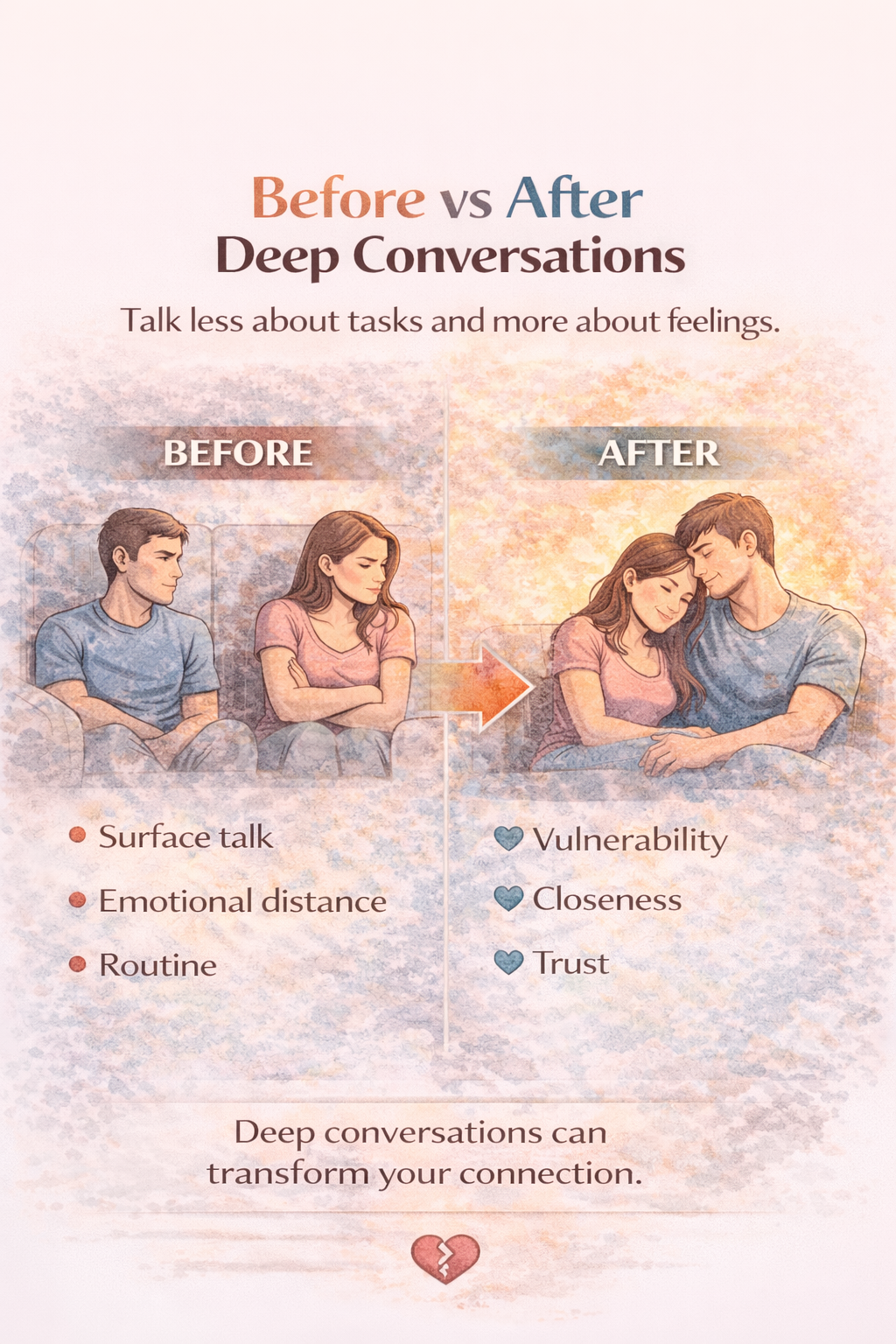
Challenges of Opening Up
Opening up with each other can be hard, especially when you’re not used to it. These are some things you might notice at first:
- Discomfort.
- Fear of judgement.
- Different types of communication styles.
- Hesitation to open up and be vulnerable.
These are normal challenges that couples can face, and it’s just part of the process.
Why Emotional Intimacy Might Not Develop
Sometimes, some partners aren’t ready for deeper conversation or connection, and these are some signs you need to pay attention to:
- Partners that avoid deep conversation.
- A lack of curiosity about the relationship.
- Dismissing feelings.
- Being defensive during conversations.
It’s important to look at these things when you’re trying to understand your relationship’s future.
Final Thoughts: Building Intimacy Isn’t About Perfection
Building emotional intimacy isn’t about perfection or asking the right questions, but it’s about creating a safe place where both people feel safe to be vulnerable and to be themselves.
Start by asking one question and stay curious and open. Make sure that you’re listening deeply and start small, and this can build into something bigger. The strongest relationships aren’t just built on attraction, but they’re built on trust, understanding, and a strong emotional connection.